NSLC Business & Entrepreneurship · University of Michigan
The Leap
An Introduction to Entrepreneurship
Lecture 1 · Danny Ellis
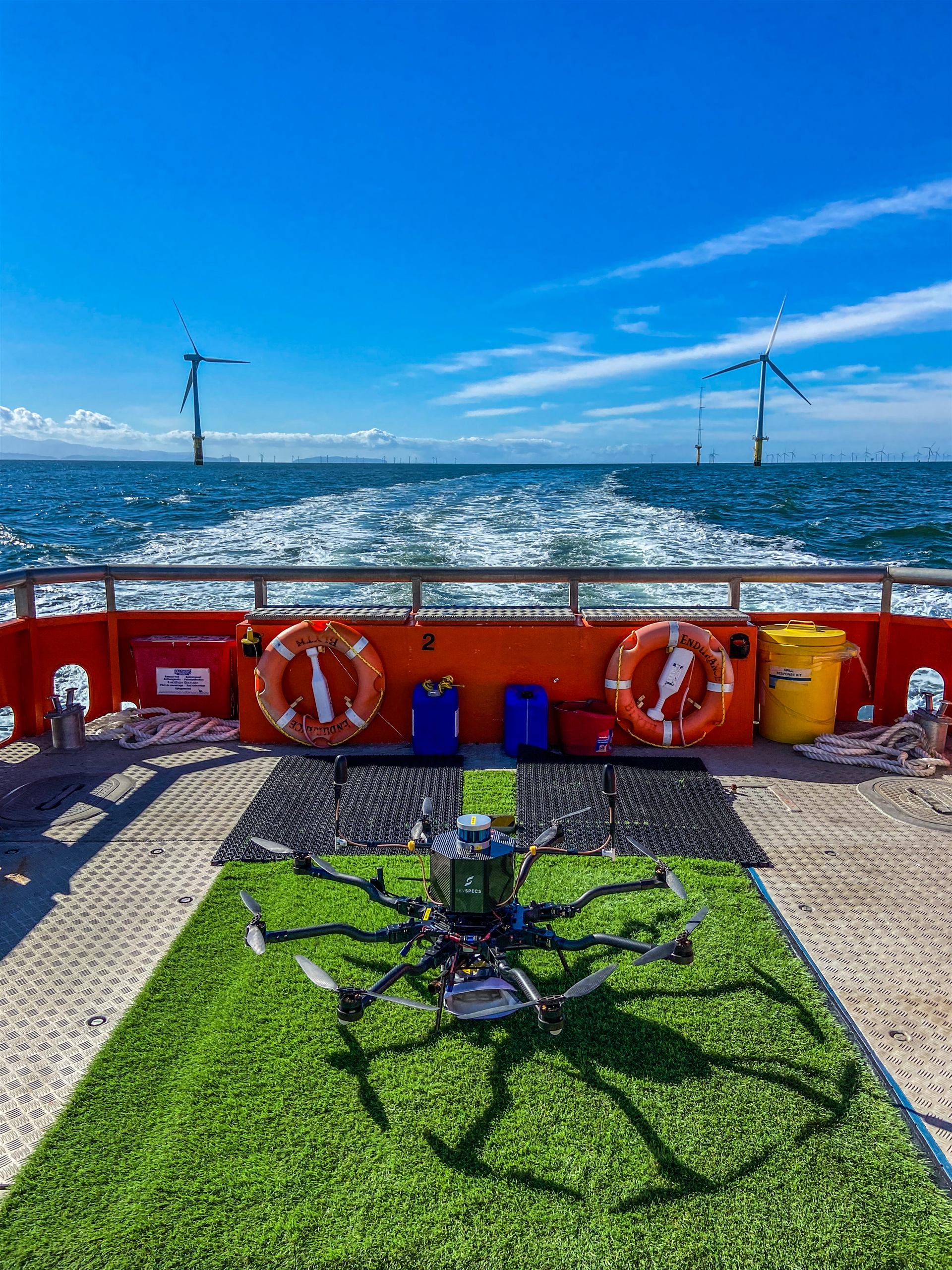
A SkySpecs drone over an offshore wind farm at sunset — we'll get to that.
Before we do introductions… let me tell you a story
We finally had it: a signed Letter of Intent for 1,000 wind turbine inspections — about $400,000. Our first commercial job, ever.
On the strength of that letter, we raised a $3 million Series A.
Three weeks later, our customer got acquired — and the deal went up in smoke.
Then we walked into our first board meeting with our brand-new investors: 4 years in. $3.7M raised, $1M in grants won… and zero dollars of revenue. Without revenue, we were never raising another dollar.
To explain how we got out of that room alive, I have to take you back to when I was sitting exactly where you are… →
Who is this guy?
From student to startup CEO — five chapters
Today's roadmap
Five building blocks of every new business
1 · The Mindset
Traits & motivations of entrepreneurs
2 · The Plan
What a business plan is (and isn't)
3 · The Idea
Where opportunities come from
4 · The Industry
Analyzing the playing field
5 · The Research
Market research fundamentals
Ask the room
Why do people become entrepreneurs?
- 👑 To be your own boss
- 💰 Higher financial success
- 🌴 Improved quality of life
- 🔥 To pursue a passion
For me? Passion — nothing else survives.
- You're never really your own boss — you answer to customers, investors, and your team
- Chasing money is usually futile. Money shows up when you solve hard problems
- Quality of life goes up on its own when you love what you do
- “If you love what you do, you never work a day in your life”
Building block 1 · The Mindset
The Entrepreneurial Mindset
A blend of characteristics, attitudes, and skills that describe how successful entrepreneurs think and act.
The secret: it's useful even if you never start a company. This is an operating system for your life and career.
The Mindset · Interactive
8 traits — flip each card. Count how many you already have.
Deeper dive · The Mindset
The one that mattered most for us: 🎢 Comfort with Risk
SkySpecs worked for a lot of reasons — but the biggest was this: the founders were always willing to bet everything on something we believed in, once we'd calculated the risk.
- ⚖️ Comfortable with risk ≠ reckless. Every big bet was measured first.
- 🧊 What it really means: be comfortable being uncomfortable.
- 📈 You gain experience either way — some of the biggest lessons of the whole journey came from the failures.
The Mindset
These skills are not just for startups
School
Group projects, applications, advocating for yourself
Day-to-day life
Solving problems nobody else will touch
Jobs & careers
“Intrapreneurs” get promoted — they act like owners
Relationships
Communication, adaptability, initiative — sound familiar?
Whatever you do after this week, you'll use this mindset everywhere.
Building block 2 · The Plan
What is a business plan?
A document that details a company's goals, the strategies for achieving them, and the projected financial outcomes.
It's a roadmap: the problem you solve → how you'll market it → what it costs → how it makes money.
Reality check: the plan will be wrong. Planning is still priceless — it forces you to find the wrong parts before they cost you money.
The Plan · This is your final pitch structure
Seven elements — tap any one to go deeper
= Your Pitch
These seven ARE the slides your team presents at the pitch competition.
Plan element 1 of 7
🎯 Problem / Opportunity
Every business starts as someone's pain. No pain, no pay.
- ✅ Strong: “Wind companies send humans on ropes up 300-ft turbines to look for cracks. It's slow, dangerous, and expensive.”
- ❌ Weak: “We think drones are cool and want to build one.”
- Judges score this on empathy, trends, and data — prove the need is real.
The moment we knew the pain was real.
- We watched a technician harness up and jump over the side of a turbine blade — just to take pictures with an iPad
- Then a 100-turbine job looking for one major defect: we uncovered 27 turbines with issues needing immediate attention
- That's when we stopped thinking about any other industry and doubled down on predictive maintenance for wind
Plan element 2 of 7
📊 Market & Competitive Analysis
Prove people already spend money on this problem — and show you know exactly who else is fighting for it.
Market size
How big is the pool of spend? Growing or shrinking?
Competitors
Direct + indirect. “We have no competition” = you haven't looked. (Full toolkit in Lecture 2.)
Trends
What change (tech, law, culture) opens the door for you right now?
Plan element 3 of 7
💎 Unique Value Proposition
One sentence: why a customer picks you over every alternative — including doing nothing.
Full workshop on this in Lecture 2 — for now, just know your pitch lives or dies on this slide.
Plan element 4 of 7
👥 Target Market
“Everyone” is not a market. Who buys first, and what do they have in common?
Demographics
Age, income, occupation
Psychographics
Attitudes, interests, lifestyle
Geographics
Where they live & work
Buying patterns
How and when they spend
Plan element 5 of 7
📣 Marketing Plan
How your target market discovers you, decides to buy, and comes back.
- 🗓️ Goals with deadlines (SMART — Lecture 2)
- 📱 Channels matched to where your customers actually are
- 📈 Key metrics so you know if it's working
Plan element 6 of 7
🧾 Cost Structure
What it costs to start, and what it costs to keep the lights on every month.
Startup expenses
One-time costs to open the doors
Fixed expenses
Bills that arrive whether you sell or not
Variable expenses
Costs that grow with each sale
Lecture 3 is entirely about this — with calculators.
Plan element 7 of 7
💵 Revenue Streams
Every way money flows in: one-time sales, subscriptions, services, licensing… SkySpecs rebuilt ours five times:
- 1️⃣ Sell an anti-crash sensor so any wind tech could fly → the data wasn't useful or measurable
- 2️⃣ So we automated the entire inspection → now the data was great
- 3️⃣ Sell the drone to the wind farm → they had nobody in the field to operate it
- 4️⃣ So we flew it ourselves — inspection as a service → but customers had no system for the data
- 5️⃣ So we built Horizon, our software platform — and eventually wrapped in repair services too
Pricing evolved with it: per drone → per turbine → per megawatt. The product you build ≠ the thing customers pay for.
Building block 3 · The Idea
Where do business ideas come from?
Internal motivation
An idea from your own direct experience — a problem you personally hit.
External motivation
An idea from the experience of others — a problem you watched someone else suffer.
SkySpecs? Honestly — we did this part backwards.
- Ours was internal: build autonomous drones, certain they'd be valuable… somehow. That's a “solution looking for a problem” — the classic trap
- The passion that saved us came later: clean electricity from wind, and keeping turbines at their best with predictive maintenance
- Your first idea is a door, not a destination
The Idea
Six places opportunities hide
Interests & skills
Hobbies, talents, things you're already great at
Problems
Pain points people would pay to make disappear
Changes
New trends, laws, customs → new needs
New discoveries
Totally new products from innovative thinking
Existing products
Improve something that already sells
Unique knowledge
Expertise or experience few others have
Building block 4 · The Industry
Zoom out: what industry are you standing in?
Industry: the production of goods or services within an economy — farming to furniture to healthcare.
The question that matters: is this industry bigger or smaller in 5 years? A great boat in a draining lake still ends up on the rocks.
In 2013, everyone told us wind was too small — and “didn't have problems.”
- The trend line said otherwise: serious investment was pouring into new development
- And the turbines already installed weren't lasting as long as promised
- Our very first deployment found so many cracks and damages, we knew the problem was far bigger than anyone realized
- 📊 Industry trend chart (M5) goes here
Building block 5 · The Research
Market research = organized listening
An organized way to gather and analyze information needed to make business decisions.
Customers
What they want, like, and need
Competition
What similar businesses are doing
Business environment
What's popular, what's selling, what's changing
The Research
Three reasons research pays for itself
Avoid costly mistakes
Wrong guesses about the market → wrong decisions. Learn from what's already been tried.
Get funding
Investors and banks fund evidence, not enthusiasm. Facts = credibility.
Design better products
Build for what customers actually want — not what you assume they want.
The Research · Interactive
Primary or secondary? Click a card, then click its bucket.
🎤 Primary
You collect it yourself, straight from potential customers
📚 Secondary
Already collected & organized by governments or companies
Your mission
What happens next
TA Workshop
Idea generation — opportunity vs. idea, with AI as your brainstorm partner
Breakout 1
Lock your team's idea + research your industry (workbook p. 8: customers, competition, environment)
The finish line
The pitch competition: full business pitch, judged on the 7 plan elements + delivery
The bar: leave Breakout 1 with one sentence — “We help [who] solve [what problem].”
The rest of the story
January 2016. No revenue, no plan — and deadlines we kept blowing through.
- 💡 Then it hit us: as students we always shipped, because the competition gave us a deadline. As a company, we'd lost our forcing function.
- 📣 So we manufactured one. We told the entire industry: in 9 months, at the world's largest wind conference, you'll watch the world's first fully autonomous turbine inspection — live.
- 🔒 If we didn't show up, everyone would know. We pointed the whole team at that one demo and said no to everything else — never been to Germany, didn't speak German, no idea if we could legally fly. We figured it all out.
- 🌬️ Demo day: 25 mph winds. We'd only tested in 15. It was designed for 32. We hit go.
- 🚁 Ten minutes later: flawless, and the customers were in awe. 4 months later we were flying an offshore fleet in the North Sea.
Entrepreneurs aren't born. They're built — by reps and deadlines. This week is your first rep. See you in Breakout 1.
The receipts
Hamburg — the demo we bet the company on
25 mph winds. One shot. The whole industry watching.